
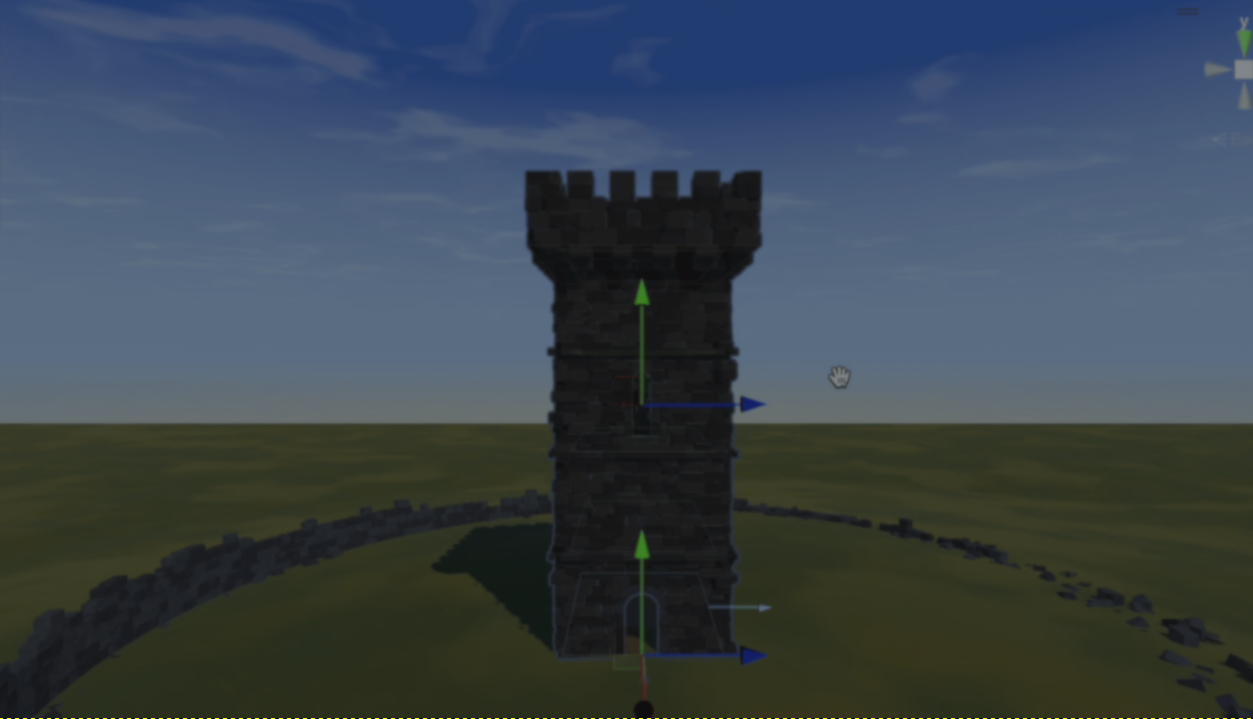
Creating a Procedural Wall system in Unity: StoneWorks.
by Vicente C.
Published |
2
Developer Aaron from R2R Games gave us a closer look at StoneWorks, his new procedural building system for generating walls, towers, and stone structures in Unity.
The original inspiration for the project came from early Tiny Glade demo videos. According to Aaron, seeing walls change shape in real time made him want to build his own procedural system from scratch.
StoneWorks
by u/craftymech in Unity3D
The system originally started with straight walls and trying to figure out how to generate each stone layer. Stones are placed from bottom to top, and to avoid repetition, each row shifts a bit to the side.
Each stone begins as a simple cube, then some of its corners get cut to give it a more natural shape. A small collection of stone variations is then generated in memory, which each new stone picks from while building the wall.
According to Aaron, this allows entire walls and towers to be built from a relatively small amount of mesh data.
# Simplified pseudo-code shared by the developer

function BuildWall(path, height, stoneSize):

    y = 0
    rowIndex = 0

    while y < height:

        rowHeight = stoneSize.y * random(MIN_Y_VARIATION, MAX_Y_VARIATION)

        layCourseAlongPath(path, y, rowHeight, rowIndex)

        y += rowHeight
        rowIndex++

    end

    // Top stone course for decoration
    addCapstoneRow()

    // chip corners for weathered look
    chipRandomCorners()

    // split stones into spatial groupings
    combineIntoChunks()

end
After the walls, the system expanded into circular structures, spline paths, and towers. That later led to archways and windows through a modifier system that removes stones from certain sections and rebuilds the surrounding areas.
Aaron explained that archways use angled stones, while windows use flatter ones for the sill sections. Once stone removal was working, Aaron moved to implement erosion.
Erosion is done by removing stones starting from the upper sections of the structure. The system also simulates destroyed sections by using spherical areas with some noise around the edges.
One of the more difficult parts during development was the destruction of larger structures with thousands of stones. Aaron explained that the original version rebuilt too much geometry whenever part of a tower was destroyed.
To improve this, the system was later split into chunks, or small groups of around 32 to 64 stones each. For example, in a cannonball test Aaron made, only the nearby chunks were rebuilt.
Since structures like castles, towers, and bridges can become very large, Aaron also built a custom LOD system. The meshes are simplified using baked textures so the damaged shapes and missing stones still remain visible from a distance.
According to Aaron, this reduced triangle counts by roughly 98% for the first LOD level. The system also uses a dithered crossfade between LODs instead of Unity’s default transitions. Alongside this project, Aaron is also prototyping a cozy game where players work for nobles and slowly build their own estate over time.
If you want to follow the development of StoneWorks and other R2R Games projects, the links will be right below.
- X: https://x.com/R2RGames
- R2R Games Website: http://r2rgames.com/
- Discord: https://discord.gg/YagdAsNUx5
Interested in learning more?
If you’re interested in technical art and editor scripting in Unity, the Unity Tool Development Bundle covers topics like procedural shapes, Shader Graph, HLSL, ray marching, custom inspectors, editor windows, and more. 📘
One of our best-selling bundle: Unity Tools and Procedural Shapes✨ https://t.co/vsA5AbbB39#madewithunity #indiedev #3DCG pic.twitter.com/SwWUzH0tj7
— Shaders Bible Series (@ushadersbible) January 6, 2026
Jettelly wishes you success in your professional career!
Did you find an error? No worries!
Write to us at [email protected], and we'll fix it!

Tool making + Techical art! Check out this two books bundle.
We invite you to explore "Unity Tool Development Bundle", a comprehensive bundle on the concepts and fundamentals seen in this post.
Other posts that might interest you.
-
.png) FoxGameLab made a quick breakdown of the dissolve effect they have been building in Unity using HLSL and VFX Graph.
FoxGameLab made a quick breakdown of the dissolve effect they have been building in Unity using HLSL and VFX Graph. -
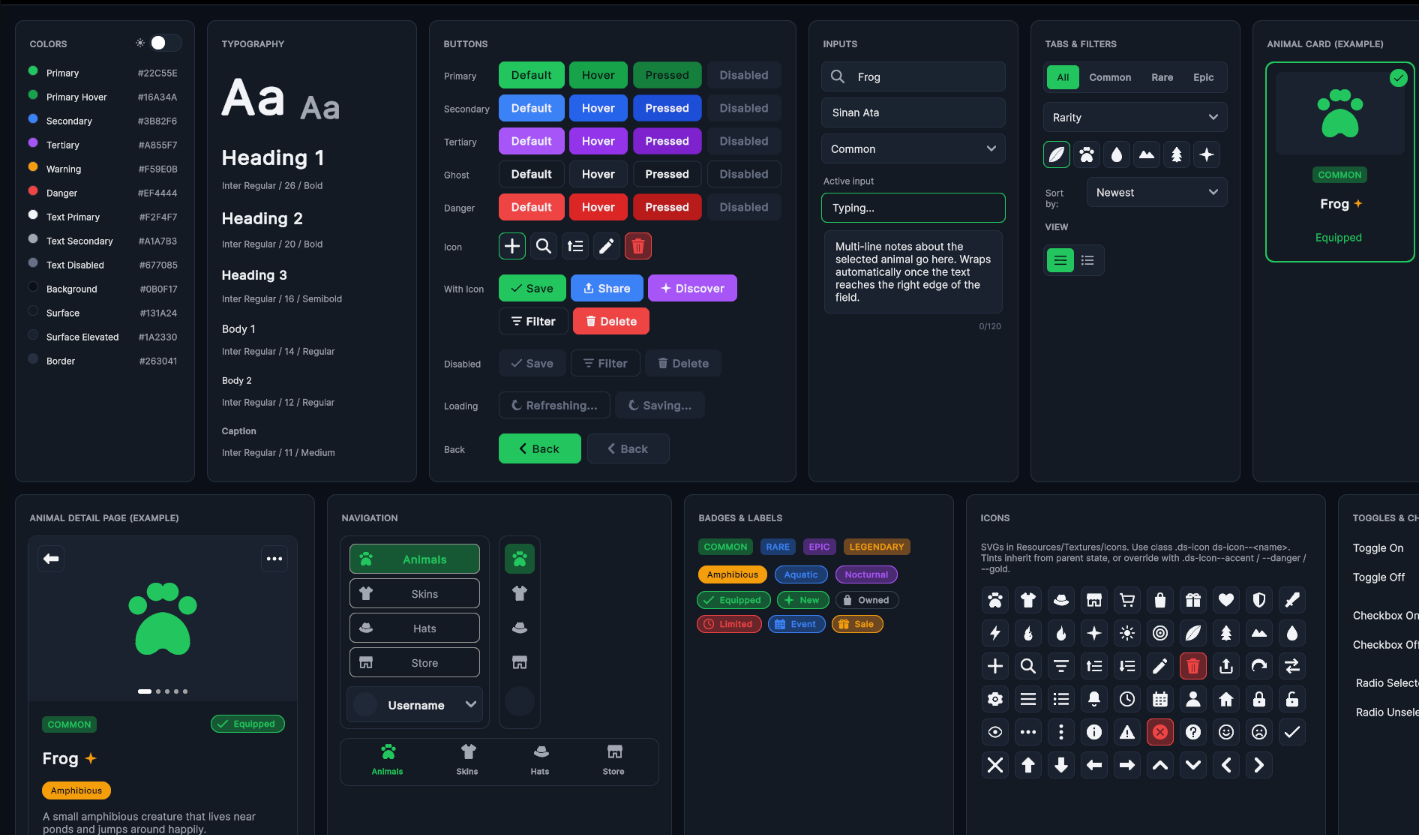.png) Learn how Sinan built an open-source UI system for Unity 6 with reusable components, themes, mobile layouts, and more.
Learn how Sinan built an open-source UI system for Unity 6 with reusable components, themes, mobile layouts, and more. -
 Mert Emir Erte showed how the new 3D menu in Paws and Shine works in Unity, using raycasts, physical interactions, and shader effects.
